
Love Bombing Signs:
35 Red Flags Disguised as Romance
What Are Love Bombing Signs?
Love bombing signs are warning signals that someone is using excessive affection as a manipulation tactic to fast-track your emotional attachment. According to research published in the Journal of Personality and Social Psychology, individuals with narcissistic traits use intense early affection strategically to create emotional dependency before their partner can evaluate the relationship clearly.
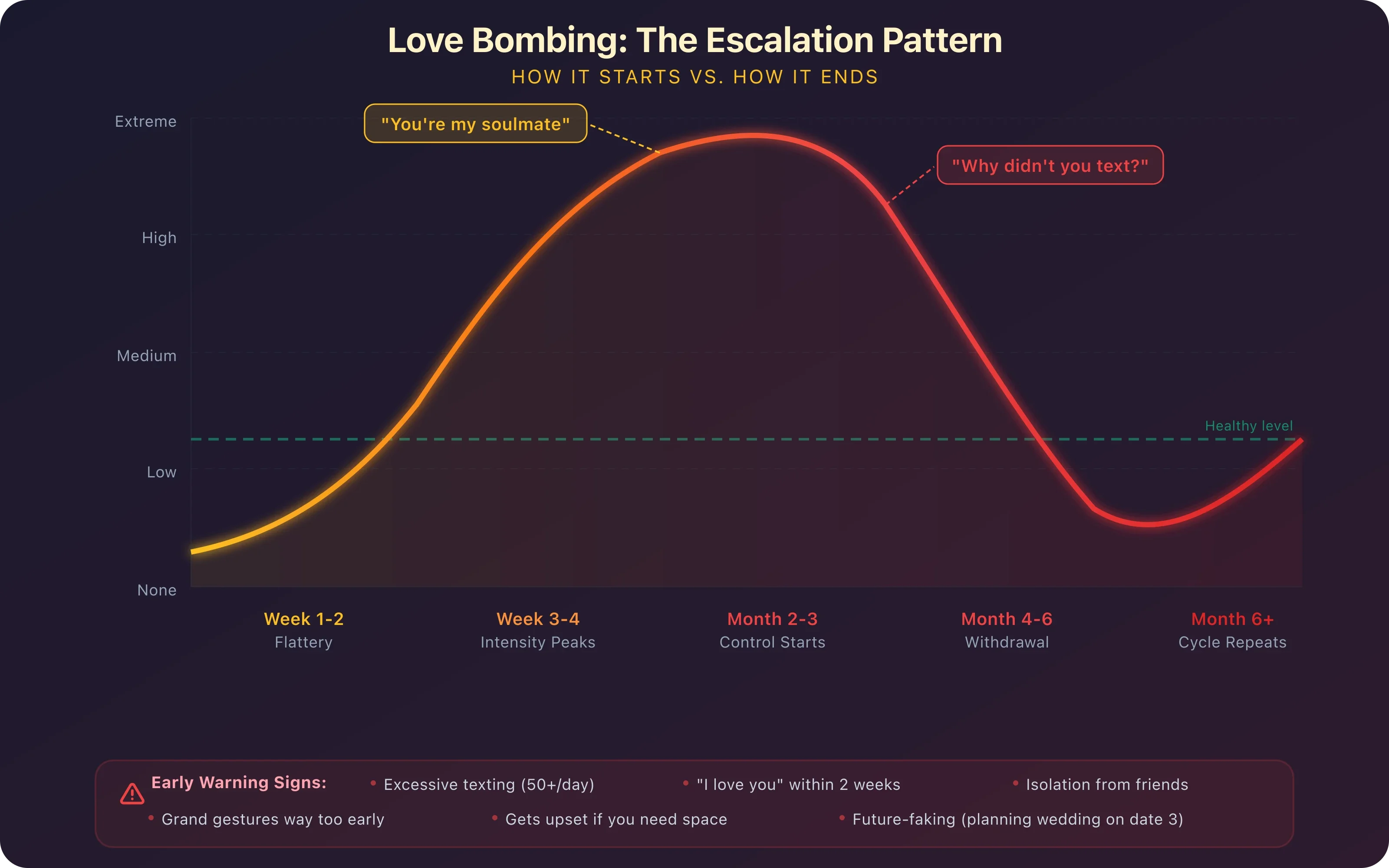
Here's what it looks like in practice: Three weeks in, he says "I've never felt this way about anyone. You're my soulmate. I want to spend the rest of my life with you." She texts you 47 times before noon and gets upset if you don't respond within minutes. He books a vacation for next summer on your second date. "I just know we're meant to be together."
It feels like a movie. But here's the uncomfortable truth: real love doesn't need to rush. Love bombing is a calculated strategy to lock you down before you can think clearly.
Below are 35 love bombing signs that look romantic but are actually red flags. If you recognize these patterns, trust your instincts. Want to test your ability to spot manipulation? Try our Red Flag / Green Flag game or see what red flags other people have spotted.
What Is Love Bombing?
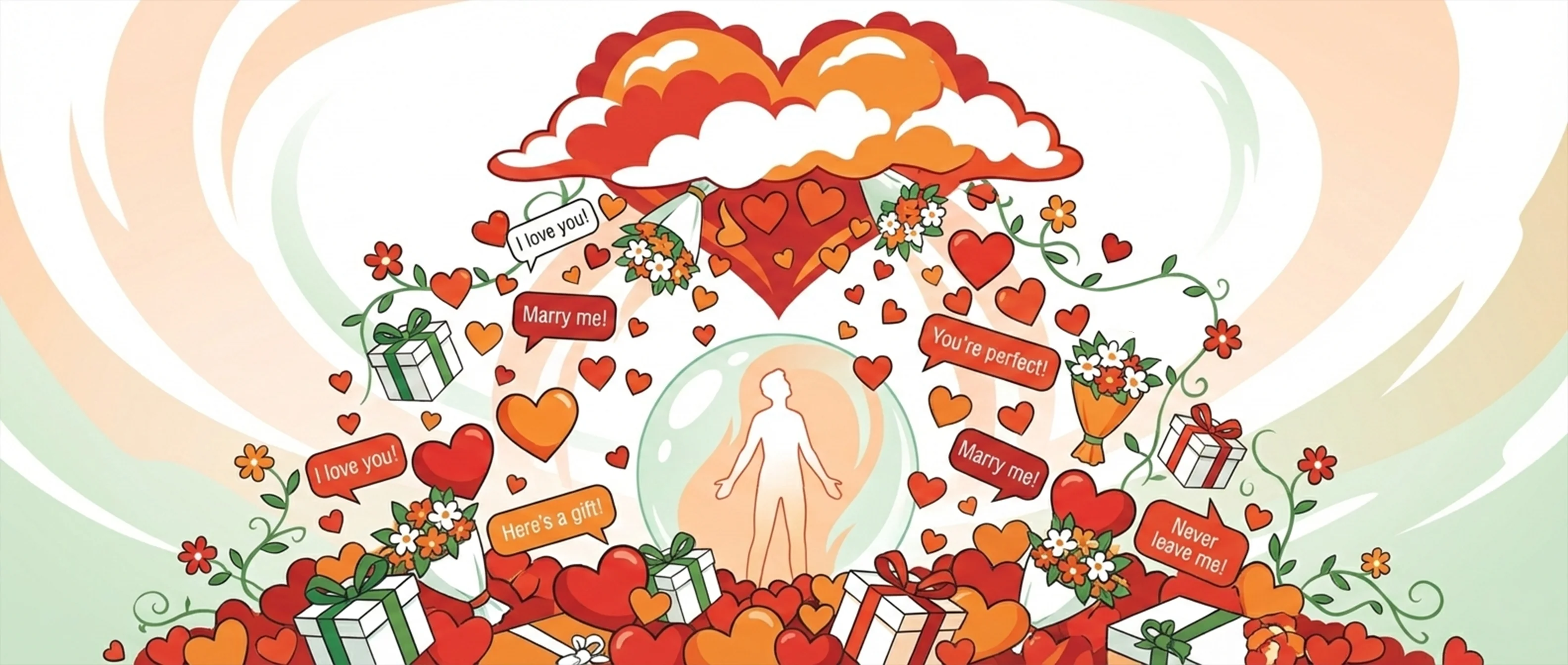
Love bombing is an intense manipulation tactic where someone showers you with excessive affection, attention, flattery, and promises early in a relationship. The goal is to create emotional dependency and fast-track your commitment before you've had time to think clearly.
Love Bombing Looks Like:
- •Overwhelming affection from day one
- •Future-planning before you really know each other
- •Constant contact that feels suffocating
- •Gifts that feel like obligations
- •Resistance when you want space
Healthy Interest Looks Like:
- •Affection that grows over time
- •Taking time to actually know you
- •Respecting your need for space
- •Thoughtful gestures without strings
- •Following your lead on pacing
The key difference is respect for your pace and boundaries. A healthy partner wants to get to know the real you. A love bomber wants to lock you down before you can think clearly.
How Do I Know If I'm Being Love Bombed?
These love bombing signs appear right away. They feel flattering at first, but the intensity is a calculated strategy to fast-track emotional bonding before you've had time to evaluate who they really are.
Overwhelming Affection
They say 'I love you' within days or weeks of meeting
Real love takes time to develop. Rushing to declarations often signals intensity over actual feelings.
Constant texting and calling from day one
Healthy relationships allow space. Non-stop contact can feel flattering but often becomes controlling.
Showering you with expensive gifts early on
Gifts create a sense of obligation. Love bombers use them to fast-track emotional debt.
They claim you're their 'soulmate' before really knowing you
Soulmate talk early on ignores the reality that real closeness requires shared experiences over time.
Planning your future together on the first few dates
Talking marriage, kids, or moving in together before establishing trust is a manipulation tactic.
Why Do Love Bombers Try to Isolate You?
Love bombers gradually cut you off from your support network. These tactics often start subtly, disguised as 'caring about you' or 'wanting you all to themselves.' Isolation makes you dependent and easier to control.
Cutting You Off
Subtly criticizing your friends and family
Comments like 'they don't appreciate you like I do' plant seeds of doubt about your support network.
Getting jealous of time spent with others
Jealousy framed as love is actually control. Healthy partners encourage your other relationships.
Creating situations where you 'choose' them over others
Setting up conflicts that force you to pick sides is a calculated isolation strategy.
Being your sole source of emotional support
When they become your only confidant, you lose perspective and become easier to manipulate.
What Manipulation Tactics Do Love Bombers Use?
Once you're emotionally invested, manipulation tactics emerge. These red flags show how love bombers maintain control and break down your boundaries over time.
Emotional Games
Hot and cold behavior to keep you off-balance
Alternating between intense affection and withdrawal creates anxiety and emotional dependence.
Using guilt to get their way
Phrases like 'after everything I've done for you' weaponize their generosity to control you.
Playing the victim when you set boundaries
Turning your reasonable limits into personal attacks makes you doubt your own needs.
Gaslighting when you raise concerns
Denying your reality with 'that never happened' or 'you're overreacting' is psychological abuse.
Love withdrawal as punishment
Withholding affection when you 'misbehave' trains you to comply to avoid emotional pain.
What Happens After Love Bombing Ends?
If you've been with someone for a while, these signs indicate you may be in a relationship that started with love bombing. The pattern often becomes clearer over time, especially once the 'honeymoon phase' ends.
The Pattern Reveals Itself
Intensity fades once they 'have' you
Love bombing is a tactic, not real affection. Once you're committed, the real person emerges.
Criticism replaces the constant praise
The same person who put you on a pedestal now finds fault in everything you do.
You feel like you're walking on eggshells
The anxiety of not knowing which version of them you'll get is a sign of an unhealthy dynamic.
Your self-esteem has decreased since meeting them
Healthy relationships build you up. If you feel worse about yourself, something is wrong.
Friends and family express concern
People who know you can often see patterns you're too close to recognize.
What to Do If You Recognize These Signs
If you're currently being love bombed:
- 1Slow things down. A healthy person will respect your pace. A love bomber will resist or get upset.
- 2Maintain your support network. Keep seeing friends and family. Notice how they react to your new relationship.
- 3Set boundaries and watch how they respond. Your limits are valid. Someone who truly cares will respect them.
- 4Trust your gut. If something feels off, it probably is. Your instincts are trying to protect you.
If you're already in a relationship that started this way:
- 1Reconnect with your support network. Reach out to friends and family, even if it's been a while.
- 2Consider talking to a therapist. A professional can help you see patterns and plan next steps.
- 3Make a safety plan if needed. If you feel unsafe, the National Domestic Violence Hotline is 1-800-799-7233.
Remember: it's not your fault if you were targeted by a love bomber. These tactics are designed to be hard to recognize, especially when you're in them. What matters now is taking steps to protect yourself. For a broader look at behaviors that should not be tolerated, see our full guide on deal breakers in relationships.
More Relationship Guides

Red Flags & Green Flags Guide
Learn to spot the warning signs and healthy signals in any relationship.
First Date Questions
100+ conversation starters to help you get to know someone authentically.
Deal Breakers in Relationships
55 warning signs across communication, trust, and values you should not ignore.
Frequently Asked Questions
Understanding love bombing and how to protect yourself
Yes, but it's rare. Some people with anxious attachment styles may come on strong without manipulative intent. The key difference: when you ask them to slow down, they respect it without guilt-tripping or getting upset.
Intentional love bombers resist or punish boundaries. They may say "I can't help how I feel" or make you feel guilty for wanting space. Someone who actually cares will hear your needs and adjust, even if it's hard for them.
Love bombing typically lasts a few weeks to a few months, usually until the love bomber feels they've "secured" you through commitment, moving in together, or another milestone.
Once they feel confident you won't leave, the intensity drops and controlling behaviors often emerge. This is why they rush commitment. The real relationship starts after they feel you're locked in.
Change is possible but requires the person to recognize their behavior as problematic and commit to long-term therapy. Most love bombers don't see their behavior as manipulation.
If they're not actively in treatment and taking responsibility, promises to change are usually part of the manipulation cycle. Real change takes years of consistent work, not a few weeks of good behavior after a confrontation.
Not always conscious. Some people learned this pattern from dysfunctional family dynamics and repeat it without realizing. However, whether intentional or not, the impact on you is the same.
Unconscious manipulation is still manipulation, and you're not obligated to accept harmful behavior regardless of intent. Their healing journey is not your responsibility to manage at the expense of your wellbeing.
Love bombing creates what psychologists call a "trauma bond." The intense highs followed by emotional lows trigger addiction-like responses in your brain. You keep chasing the person from the beginning, even though that version was never real.
This is by design, and it's why professional support can be crucial for leaving. A therapist who understands trauma bonding can help you process what happened and rebuild your sense of self outside the relationship.
About the Author
Emily CarterRelationships Writer
Emily writes about the patterns that keep showing up in relationships and what to do about them. Her articles break down how couples communicate, argue, and figure things out together.
Most dating advice skips the "why" and goes straight to the tips. Emily's articles dig into the patterns behind the behavior, which is usually the part that actually helps.
View all articles by Emily →